

Meta description: Following Ali Khamenei’s death in missile strikes, Iranian clerics face the difficult task of selecting a new Supreme Leader amid Israeli threats and ongoing regional conflict.
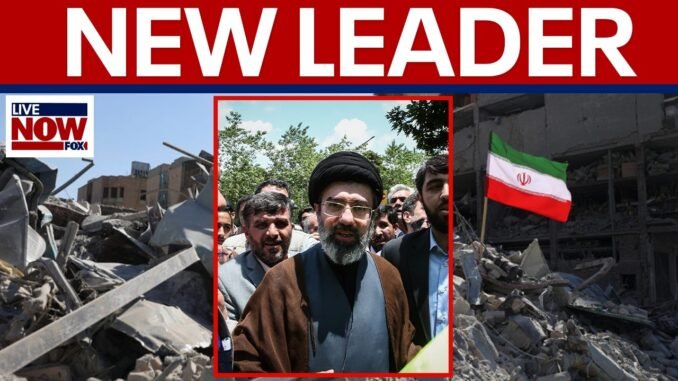
The Islamic Republic of Iran finds itself at a critical crossroads as senior clerics prepare to announce the country’s next Supreme Leader, following the death of 86-year-old Ali Khamenei in recent missile strikes carried out by the United States and Israel.
According to Iran’s state-linked Mehr News Agency, a decision has already been reached, though “some obstacles” remain before the successor’s name can be publicly announced. The delay has created tension within Iran, with Hojjatoleslam Jafari, a member of the Assembly of Experts, acknowledging the public’s growing impatience.
“The delay in electing the third leader is bitter and unwanted for everyone, and there is no alternative, so we should not have bad thoughts about our representatives at this difficult time,” Jafari stated.
The Leading Candidate: Mojtaba Khamenei
Reports from The New York Times suggest that Mojtaba Khamenei, the late Supreme Leader’s second son, is the frontrunner to succeed his father. However, according to Christian Emery of University College London, this potential appointment carries significant controversy.
“He is reportedly extremely influential inside Iran but working against him is both his lack of government experience and the political and clerical establishment’s fear that returning to hereditary rule would undermine the Iranian Revolution’s founding principle of no more Shahs,” Emery explained.
The BBC previously reported that Ali Khamenei himself had warned against hereditary succession years ago and was thought to have ruled out his son as a potential successor. Yet Mojtaba’s strong connections with the Islamic Revolutionary Guard Corps (IRGC), dating back to his service during the Iran-Iraq War, could prove decisive in his favour.
If appointed, Mojtaba would likely preserve the “enormous economic and political power base” that the Revolutionary Guards developed under his father’s leadership, according to Emery.
Israel’s Chilling Warning
The selection process is further complicated by an extraordinary threat from Israel. In a post on X (formerly Twitter), Israeli Defence Minister Israel Katz declared that the next Iranian Supreme Leader would be “an unequivocal target for elimination,” regardless of who assumes the position.
This warning comes as the strikes that killed Ali Khamenei also reportedly claimed the lives of his wife Zahra Adel, his mother Mansoureh Khojasteh Bagherzadeh, and one of his sons.
The Selection Process and Its Challenges
Under Iran’s constitution, the Assembly of Experts—an elected body of 88 clerics—is responsible for choosing the Supreme Leader through a majority vote. A smaller committee within the assembly prepares a shortlist of acceptable candidates before the final decision.
When Khamenei himself became Supreme Leader in 1989 following the death of Ruhollah Khomeini, the founder of the Islamic Republic, the Assembly of Experts took just 24 hours to approve him. Iran has had only these two Supreme Leaders since the 1979 Revolution.
However, the current circumstances are far more complex. Emery noted that it remains unclear how the Assembly could safely convene, as such a gathering might present an opportunity for Israel or the United States to target additional Iranian leaders.
Alternative Candidates
Beyond Mojtaba Khamenei, several other names are in contention:
Gholam-Hossein Mohseni-Ejei, currently serving as Iran’s chief justice, is considered a hardline figure associated with crackdowns on anti-government protests.
Hassan Khomeini, the grandson of the Islamic Republic’s founder, could appeal to both reformist and conservative factions. Analysts suggest his family name and broad connections could make him a stabilising choice for the regime.
Alireza Arafi, a member of both the Guardian Council and the Assembly of Experts, is viewed as a relatively safe option who would likely maintain Khamenei’s policies without challenging the Revolutionary Guard’s influence.
What This Means for the Region
The choice of Iran’s next Supreme Leader carries enormous implications not just for Iranians, but for the entire Middle East. With ongoing conflicts involving Israel, the United States, and various regional actors, the new leader’s stance on foreign policy, nuclear development, and relations with proxy groups across the region will shape the geopolitical landscape for years to come.
As Nigerian observers of international affairs know well, leadership transitions during times of conflict rarely proceed smoothly. The combination of internal political pressures, external military threats, and the weight of revolutionary ideology creates a perfect storm of challenges for Iran’s clerical establishment.
The world watches and waits to see who will emerge as the Islamic Republic’s third Supreme Leader—and whether they can survive the threats already made against them.
For more details, check buzzUp9ja
Be the first to comment