

Summary: Former APC Chairman Hilliard Eta clashed with Arise TV anchors over alleged biased coverage of Tinubu’s administration, sparking debate about media independence and government accountability in Nigeria.
A heated exchange unfolded on Arise News earlier today when former National Chairman of the All Progressives Congress (APC), Hilliard Eta, accused the television station of deliberately ignoring the infrastructural achievements of President Bola Ahmed Tinubu’s administration while amplifying its shortcomings.
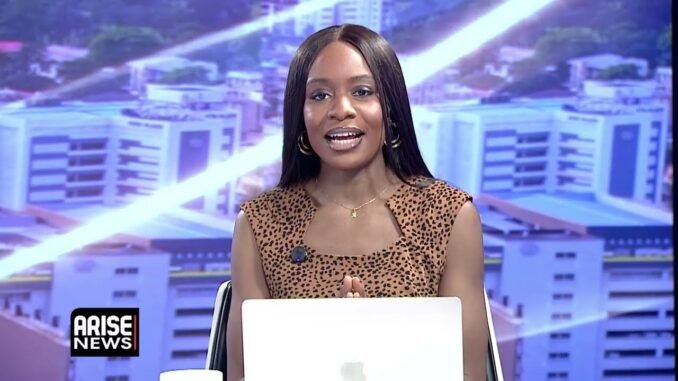
The confrontation, which has since gone viral on Nigerian social media, saw the station’s anchors firmly defending their editorial independence and journalistic integrity against what they perceived as unfair criticism from the APC chieftain.
The Accusation That Sparked the Drama
During a live political discussion segment, Eta expressed frustration with what he described as Arise TV’s “one-sided coverage” of the Tinubu presidency. According to the former party chairman, the station has consistently highlighted challenges facing the administration—such as fuel subsidy removal impacts, naira devaluation, and rising cost of living—while allegedly downplaying or ignoring infrastructure projects, policy reforms, and other government initiatives.
“You people at Arise TV are not being fair to this government,” Eta reportedly stated. “All we hear every day is fuel price, hardship, hardship. What about the roads being built? What about the railways? What about the investments coming into the country?”
Anchors Stand Their Ground
The Arise News anchors, known for their no-nonsense approach to political interviews, quickly pushed back against Eta’s claims. They reminded the former APC chairman that journalism requires holding those in power accountable, regardless of political affiliation.
One anchor pointedly asked Eta if he expected the media to function as a government public relations outfit, emphasizing that Nigerians are currently facing unprecedented economic hardship that cannot be ignored or sugarcoated.
“Are we supposed to pretend that Nigerians are not struggling?” one of the anchors asked. “Should we ignore the fact that many families can barely afford three meals a day? That is not journalism—that is propaganda.”
The anchors also noted that the station regularly invites government officials and APC representatives to explain policies and showcase achievements, but many decline or fail to effectively communicate their message.
A Reflection of Broader Media-Government Tensions
This exchange is not an isolated incident but rather reflects the growing tension between Nigerian media houses and the Tinubu administration. Since taking office in May 2023, President Tinubu’s government has faced intense scrutiny over economic reforms that have significantly impacted the average Nigerian.
The removal of fuel subsidies, floating of the naira, and resulting inflation have dominated public discourse, making it difficult for discussions about infrastructure and long-term development plans to gain traction—especially when citizens are grappling with immediate survival concerns.
Media organizations like Arise TV, Channels Television, and others have been criticized by government supporters for what they perceive as negative coverage. However, journalists and media advocates argue that this criticism often conflates accountability journalism with bias.
Social Media Weighs In
As clips of the exchange circulated on X (formerly Twitter), Facebook, and other platforms, Nigerians expressed divided opinions.
Some supported Eta’s position, arguing that the media should provide balanced coverage that includes government achievements alongside criticisms. “Not everything is bad. There are some good things happening. The media should report both sides,” one user commented.
Others defended Arise TV, pointing out that journalism’s primary role is to question power and give voice to the people’s experiences. “When people are hungry, you want journalists to be talking about road construction? Make we chop road?” another Nigerian tweeted, capturing the frustration many feel about prioritizing infrastructure talk over immediate economic survival.
The Bigger Picture: Press Freedom and Democratic Accountability
This incident raises important questions about the role of media in Nigeria’s democracy. While government officials and party leaders naturally want positive coverage of their work, independent media must maintain the delicate balance between reporting achievements and holding power accountable.
For many Nigerians currently experiencing economic hardship, media coverage that reflects their daily struggles feels more relevant than discussions of long-term infrastructure projects whose benefits remain distant or unclear.
At the same time, constructive journalism that highlights both challenges and solutions, problems and progress, can help citizens make informed assessments of their government’s performance.
What This Means for Political Discourse
As Nigeria approaches future election cycles and continues navigating complex economic reforms, exchanges like the one between Eta and Arise TV anchors will likely become more common. Political parties want favorable media coverage, while credible media organizations insist on editorial independence.
The question remains: Can Nigerian media houses maintain their watchdog role without being labeled as biased? And can government officials accept critical coverage as part of democratic accountability rather than personal attacks?
For now, Arise TV has made its position clear—the station will continue reporting the news as it affects ordinary Nigerians, regardless of which political party is in power.
For more information, check buzzUp9ja
Be the first to comment