
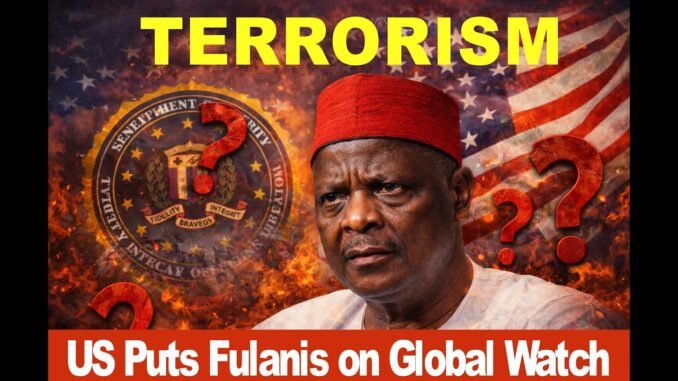

The Concerned Fulani People of Nigeria has issued a strong warning to international actors, particularly the United States, urging them to stop presenting the Fulani ethnic group as the main source of insecurity plaguing Nigeria.
The council expressed deep concern over what it described as a dangerous narrative that unfairly singles out the Fulani community while ignoring the complex, multi-faceted nature of Nigeria’s security challenges.
A Plea for Fair Representation
In a statement that has sparked conversations across Nigerian social media and traditional platforms, the group emphasized that Nigeria’s insecurity crisis cannot be attributed to any single ethnic group. The Fulani council argued that such oversimplified narratives not only distort reality but also fuel ethnic tensions and prejudice against millions of law-abiding Fulani Nigerians.
“We are deeply concerned about the continued portrayal of our people as the sole perpetrators of violence and insecurity in Nigeria,” a spokesperson for the group stated. “This narrative is not only false but dangerous, as it incites hatred and violence against innocent Fulani people across the country.”
The Bigger Picture of Nigeria’s Security Crisis
Nigeria’s security landscape is undeniably complex, with multiple armed groups, criminal gangs, and insurgent organizations operating across different regions. From Boko Haram and ISWAP in the Northeast to banditry in the Northwest, kidnapping rings in the Southeast, and cultism in urban centers, the country faces diverse security threats that transcend ethnic lines.
Security analysts have repeatedly pointed out that reducing Nigeria’s multifaceted crisis to an ethnic issue oversimplifies the problem and hinders effective solutions. Criminal elements exist within every ethnic group in Nigeria, and the vast majority of Fulani people are peaceful citizens engaged in legitimate businesses and livelihoods.
International Perception Matters
The Fulani council’s appeal to the US and other international actors highlights growing concerns about how foreign narratives shape both domestic and international perceptions of Nigeria’s challenges. Such characterizations can influence foreign policy decisions, humanitarian interventions, and even travel advisories that affect Nigeria’s international standing.
The group called on the US Commission on International Religious Freedom and other international bodies to conduct more balanced assessments that recognize the complexity of Nigeria’s security situation without stigmatizing entire ethnic communities.
Voices of Concern
Many Nigerians, including civil society organizations, religious leaders, and security experts, have echoed similar concerns about ethnic profiling in discussions around national security. They argue that sustainable solutions require addressing root causes such as poverty, unemployment, weak governance, climate change impacts on farming and herding, and inadequate law enforcement—rather than scapegoating particular groups.
“When we label entire ethnic groups as security threats, we alienate millions of potential partners in the fight against insecurity,” noted one human rights advocate. “We need inclusive approaches that unite rather than divide Nigerians.”
The Path Forward
As Nigeria continues to grapple with its security challenges, the Fulani council’s statement serves as a reminder that ethnic stereotyping helps no one. Effective security strategies must be based on accurate intelligence, respect for human rights, and recognition that criminality is not ethnic—it is individual and opportunistic.
The call for balanced representation from international observers is particularly timely as Nigeria prepares for another election cycle and continues to seek international support in addressing its security challenges.
For lasting peace and security, Nigeria needs narratives that unite its diverse peoples against common threats, rather than those that divide along ethnic or religious lines. The Fulani council’s warning should prompt reflection on how we discuss, analyze, and ultimately address the country’s complex security landscape.
—
What are your thoughts on ethnic profiling in security discussions? How can Nigeria build more inclusive approaches to tackling insecurity? Share your views in the comments below.
Follow for more news on buzzUp9ja
Be the first to comment