
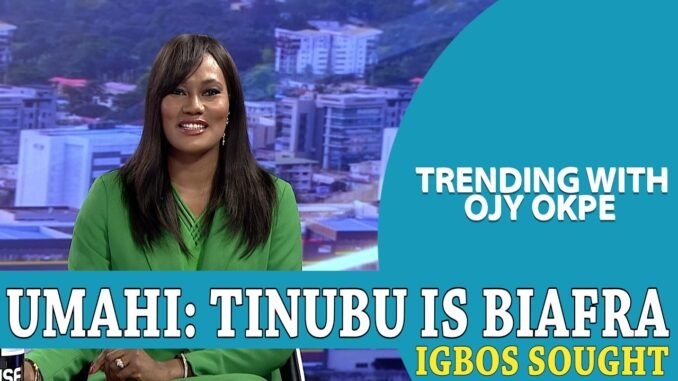

Minister of Works makes controversial statement at APC gathering, sparking debate across Nigeria
The Minister of Works, David Umahi, has stirred fresh conversation across the Southeast and beyond with a bold declaration that President Bola Ahmed Tinubu represents “the Biafra Igbos have been looking for.”
The former Ebonyi State Governor made this controversial statement during an All Progressives Congress (APC) presidential primary election gathering in Umuahia, Abia State, where he addressed party faithful and stakeholders from the Southeast region.
A Statement That Demands Attention
Umahi’s comparison of President Tinubu’s administration to the long-standing Biafran aspiration among some Igbo people has generated mixed reactions across social media and political circles. The Minister’s choice of words appears calculated to redirect the conversation about Igbo interests from secessionist agitation toward mainstream political participation.
“The development and progress we seek as Igbo people can be achieved under this administration,” Umahi reportedly emphasized, though the full context of his statement is still being analyzed by political observers.
Understanding the Context
The reference to Biafra carries deep historical and emotional weight for many Igbos, recalling the Nigerian Civil War of 1967-1970 and the ongoing agitation by groups like the Indigenous People of Biafra (IPOB) for a separate homeland. By invoking this powerful symbol, Umahi has positioned himself at the center of a delicate debate about Igbo identity, development, and political strategy.
The Minister’s statement comes at a time when:
– Infrastructure projects in the Southeast are receiving increased federal attention
– Debates about equity and inclusion in national governance remain heated
– Questions about the best path forward for Igbo interests continue to divide opinion
Divided Reactions Expected
Political analysts predict that Umahi’s statement will generate diverse responses:
Supporters may argue that he is advocating for Igbo people to leverage their position within the federal government to secure development and representation—a pragmatic approach to achieving progress.
Critics will likely view the comparison as inappropriate or even offensive, arguing that the Biafran struggle represents specific historical grievances and aspirations that cannot be equated with support for any administration.
The Bigger Picture
David Umahi’s political journey—from PDP Governor to APC Minister—has been marked by controversy and calculation. His latest statement appears designed to:
1. Rally Southeast support for the APC ahead of future elections
2. Position himself as a bridge-builder between Igbo interests and the federal government
3. Reframe the conversation about Igbo marginalization toward political participation
Whether this approach will resonate with ordinary Igbo people or further alienate them from the APC remains to be seen.
What This Means for Nigerian Politics
This development highlights the ongoing tension in Nigerian politics between ethnic identity, regional interests, and national unity. As the 2027 elections approach, statements like Umahi’s will increasingly frame how politicians appeal to regional sentiments while maintaining national ambitions.
For now, the Minister’s words have succeeded in one regard: getting everyone talking about the Igbo question, the APC, and the Tinubu administration all at once.
What do you think? Is Umahi’s comparison appropriate, or has he crossed a line? Share your thoughts in the comments below.
Stay connected with us for more updates on Nigerian politics and governance.
Visit buzzUp9ja for more details
Be the first to comment