
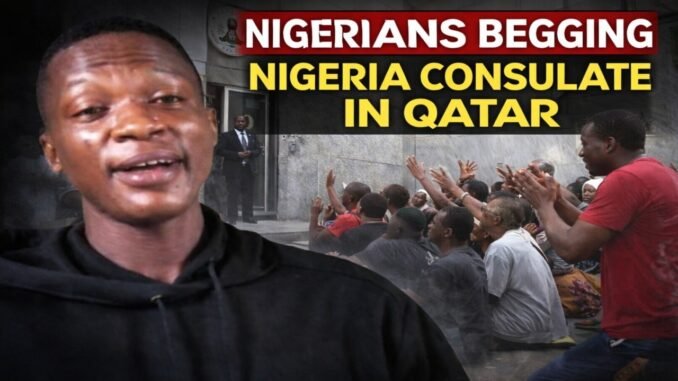

A Nigerian family’s desperate plea exposes the harsh reality of traveling with a green passport as missile attacks rock the Middle East
For many Nigerians, the saying “your Nigerian passport is your problem” has never felt more real than it does right now for a group of stranded citizens in Qatar.
As tensions escalate across the Middle East with Iran launching missile attacks on Kuwait, Saudi Arabia, Qatar, and UAE, one Nigerian woman’s cry for help on social media has sparked a painful national conversation about the value—or lack thereof—of our green passport.
Nine Days of Helplessness in a War Zone
The woman, who is stuck in Qatar with her family and other Nigerians, took to X (formerly Twitter) to share her harrowing experience, painting a vivid picture of abandonment that many Nigerians abroad know all too well.
“Nigeria can happen to you anywhere in the world as long as you’re using this Nigerian passport,” she wrote, her frustration evident in every word. “9 days stuck in Qatar yet nothing can be done because of this passport. Nigerians are literally the only ones left at this hotel.”
While citizens of other nations have been swiftly evacuated by their governments, Nigerians remain stranded, watching helplessly as plane after plane departs—without them.
The Green Passport Curse
Her story gets even more heartbreaking. According to the stranded woman, the Nigerian passport has become a digital barrier preventing them from even securing alternative routes to safety.
“The passport can’t even get us a Saudi visa to at least leave from here,” she explained. “Once you click Nigerian, it stops—even with a UK visa.”
Think about that for a moment. Even with valid visas from Western countries, the mere fact of holding a Nigerian passport is enough to lock digital doors that might lead to safety.
Where Is the Nigerian Government?
Perhaps most painful is the silence from Nigerian authorities. The woman revealed that they have contacted both the Nigerian Embassy and Consulate, but received no positive response.
“Every Nigerian here just feels helpless,” she wrote. “This situation is a highly diplomatic situation, but we seem to not have strong diplomatic relations.”
She even tagged Abike Dabiri-Erewa, the Chairman of the Nigerians in Diaspora Commission (NIDCOM), in her posts, desperately seeking intervention from someone—anyone—in the Nigerian government who might care.
Not Just Young People—Elderly and Children Trapped Too
What makes this situation even more urgent is the composition of those stranded. According to the woman, there are elderly people and children among the group, all waiting for a repatriation flight that may or may not come.
“For the repatriation flight, for how long are we going to have to wait for?” she asked. “We need help here.”
Fellow Nigerians Try to Help
As the post went viral on Nigerian Twitter (sorry, X), concerned citizens began suggesting alternatives—different routes, visa options, contacts at embassies. But according to the stranded woman, they have tried everything suggested without success.
The reality is sobering: when you’re Nigerian and crisis strikes abroad, you’re often on your own.
A Familiar Story
This is not the first time Nigerians have been left stranded during international crises. From Libya to Sudan, from Ukraine to Lebanon, the pattern repeats itself: when trouble comes, countries evacuate their citizens—except Nigeria.
While other nations deploy planes, arrange safe corridors, and work round the clock to bring their people home, Nigerians are often left to fend for themselves, armed with nothing but prayers and a passport that opens few doors.
The Bigger Picture
This woman’s story is a mirror reflecting a larger truth about Nigeria’s standing in the international community. Our diplomatic relations are weak, our passport is among the weakest in the world, and our government’s response to citizens in distress abroad is often slow, inadequate, or non-existent.
For those of us back home, it’s easy to think “this doesn’t affect me.” But as this woman’s opening line reminds us: “Nigeria can happen to you anywhere in the world as long as you’re using this Nigerian passport.”
What Needs to Happen
Nigerian authorities must treat this as the emergency it is. These are Nigerian citizens trapped in an active conflict zone. Every hour of delay is another hour of danger for them.
The government needs to:
– Immediately establish contact with all stranded Nigerians in the affected countries
– Arrange emergency repatriation flights
– Work diplomatically to secure safe passage for citizens who cannot be immediately evacuated
– Provide regular updates to families back home
A Call to Action
If you’re reading this and have connections to anyone in government, at NIDCOM, or in Nigeria’s foreign service, please share this story. These are real people—families with children and elderly parents—trapped in a war zone while their country remains silent.
As Nigerians, we deserve better than this. Our passport should be a symbol of protection abroad, not a liability. Our government should move heaven and earth to protect citizens in danger, not leave them to the mercy of chance and the kindness of strangers.
To the woman in Qatar and all Nigerians stranded with her: we see you, we hear you, and we’re praying that help comes soon.
What are your thoughts on this situation? Have you or someone you know experienced similar treatment while travelling with a Nigerian passport? Share your stories in the comments below.
For more information, check buzzUp9ja
Be the first to comment